Capacity & latency01 / 08
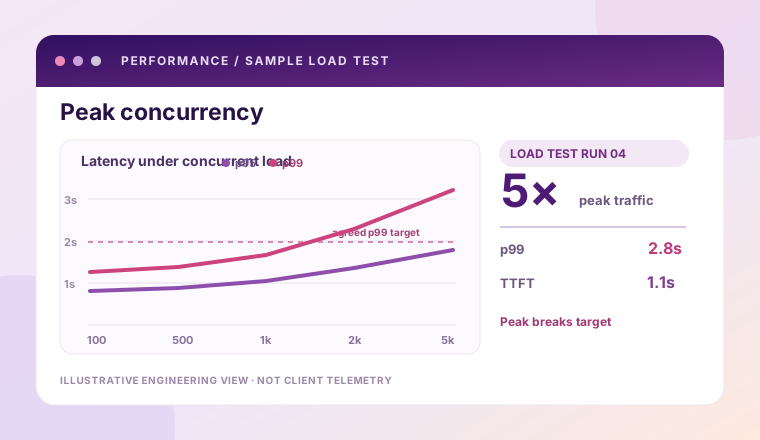
p99 and time to first token hold up when active users multiply.
Engineering delivery · Applied AI
From solution design and development to integration, launch, support, and end-user training.
You built the product. We scale it to enterprise-grade, under real load and inside regulated environments (HIPAA, SOC 2).

Start with the outcome
Explore the problems behind our projects, then tell us which part of your system needs to move.
Insurance intake that validates extracted data, routes exceptions and updates connected systems.
See the work 02 / High-throughput integrationA service bus connecting heterogeneous systems and carriers under high request volumes.
See the work 03 / Data modernization200 TB of historical records migrated into a long-term platform and operating workflows.
See the workScale solution to enterprise-grade
We assemble the engineering team your scale target calls for — with the right skills, team size, timing, and technology stack.
Discuss your scale target p99 and time to first token hold up when active users multiply.
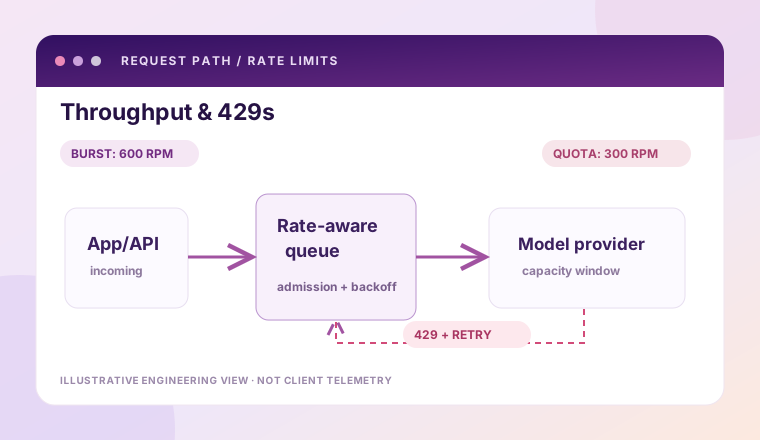
Request throughput stays controlled across quota windows, retries and provider failures.
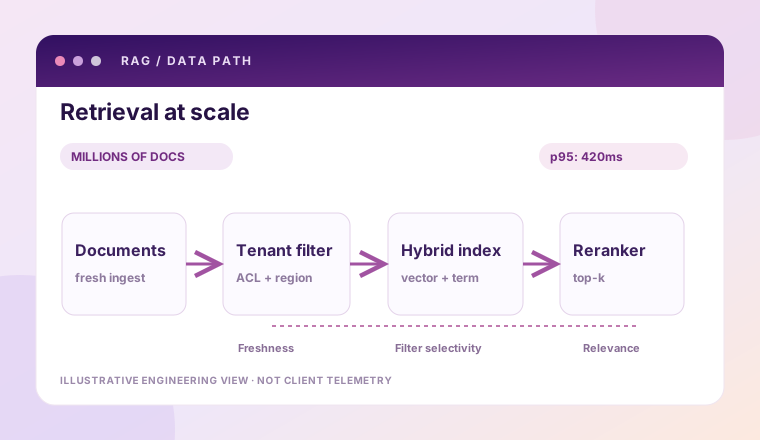
Retrieval remains fast, fresh and relevant as the corpus and tenant filters grow.
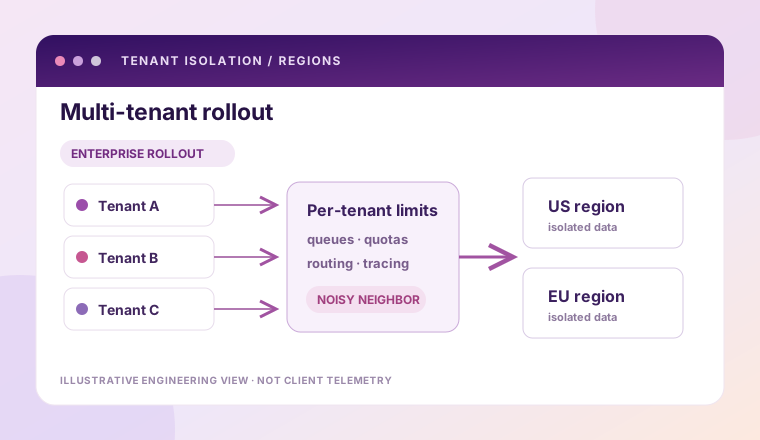
New tenants and regions launch through a repeatable, isolated delivery path.
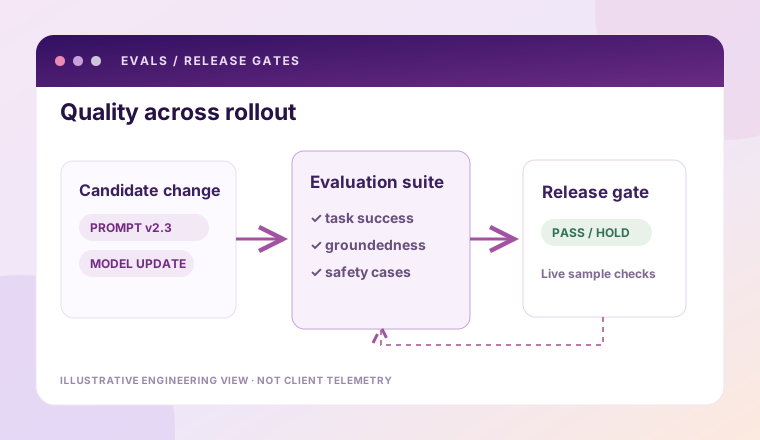
Model, prompt, retrieval and data changes keep critical user tasks working.
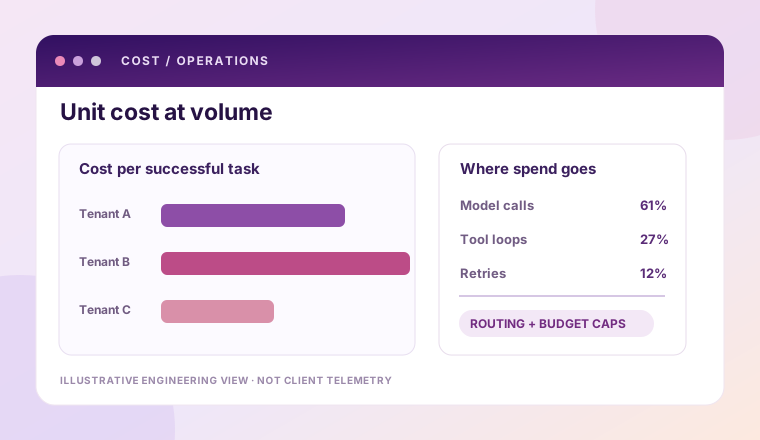
Cost per successful task remains visible and controlled as usage grows.
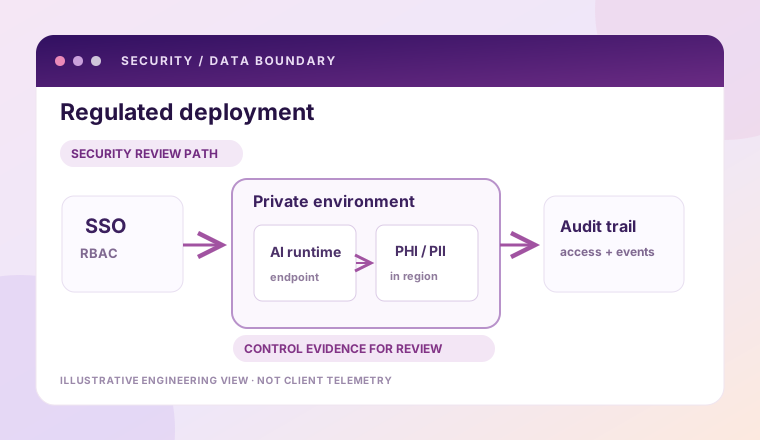
The deployment fits the buyer’s data boundary and produces evidence for security review.
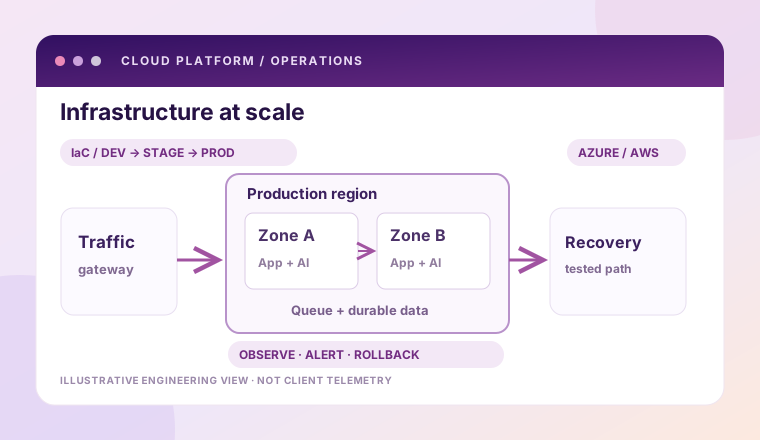
Cloud capacity, deployments and recovery keep pace with enterprise rollout.
p99 and time to first token hold up when active users multiply.
Request throughput stays controlled across quota windows, retries and provider failures.
Retrieval remains fast, fresh and relevant as the corpus and tenant filters grow.
New tenants and regions launch through a repeatable, isolated delivery path.
Model, prompt, retrieval and data changes keep critical user tasks working.
Cost per successful task remains visible and controlled as usage grows.
The deployment fits the buyer’s data boundary and produces evidence for security review.
Cloud capacity, deployments and recovery keep pace with enterprise rollout.
Enterprise-grade starts with the solution you already have. I want to understand what works today, what breaks as demand grows, and what the next stage requires.
From there, we choose the right scaling strategy, assemble the team for that specific job, and take responsibility for how it performs in production.
Your outcome is personal to me.

One owner for the plan and the handoffs.
Works with product and engineering leads to keep scope, dependencies, risks, and acceptance visible through the release.

Turn a moving brief into buildable work.
Map workflows with stakeholders, define edge cases and acceptance criteria, and stay close to engineers as requirements change.

Make scaling choices fit the system.
Reviews architecture and constraints with technical leads, maps tradeoffs, and stays involved as the design becomes working software.

Add build capacity inside the codebase.
Work in product repositories, join code reviews, and follow the release process to deliver APIs and workflows the product team can maintain.

Connect models to real data and workflows.
Build agents, document AI, retrieval, and data pipelines with application and data teams, inside established access boundaries.

Know what changed before users do.
Build test cases and eval sets with domain experts, then run regression and release checks against critical user journeys.

Give each release an operating path.
Work with platform owners in cloud environments, CI/CD, and monitoring setup to prepare deploys, rollback, and recovery.
Move one scale target into production.
Joins the AI product team around a defined capacity, latency, or quality milestone, from design through load tests and release.
Make the next client deployment repeatable.
Works with platform and security leads on tenant boundaries, identity, auditability, deployment, and handover.
Put the AI workflow inside the product.
Pairs with application and data teams to connect models, business rules, data flows, exceptions, and evaluation.
Give a defined product stream one accountable team.
Works with product owners and technical leads across the backlog, architecture, implementation, testing, launch, and support.
Selected project experience
Our work spans financial services, healthcare, logistics, and large-scale enterprise platforms.










What we do
From a new platform to the difficult system inside an existing one, we take responsibility for making the solution work.
Design and deliver software around the way people, data, and operations actually work.
Connect fragmented systems, move critical data, and replace fragile legacy workflows.
Put AI into real workflows with evaluation, human oversight, and the controls needed to operate.
Built for production
A successful launch is one milestone. The solution must stay useful, observable, and manageable afterward.
Test the workflows, integrations, and edge cases that matter to the people using the system.
Design access, traceability, and review into the system where operational and regulatory requirements demand it.
Instrument the service so teams can see failures, measure performance, and improve it safely.
Document the solution, train users, and support the teams who will operate it.
Selected work
A selection of problems our teams have helped solve across AI, integration, and large-scale data.
AI-assisted intake reads incoming insurance documents, checks extracted data, and routes exceptions to people before downstream systems are updated.
Voice agents handle patient conversations and pass useful, reviewable information into care systems, with human intervention where needed.
A high-throughput service bus connects heterogeneous modules and courier providers, reducing the friction of operating across systems.
Historical records were migrated into a new document storage environment and connected to the workflows needed to keep them useful.
Examples are summarized where client confidentiality limits public detail.
How delivery works
We work with your technical and business leads to define the outcome, make the hard choices visible, and deliver in usable stages.
Map the users, constraints, existing technology, and result that matters.
Agree on architecture, critical integrations, risks, and a workable plan.
Ship in stages, validate with real users, and prepare for production.
Monitor, improve, document, and train the teams who depend on it.
Start a conversation
Tell us what needs to work, what is already in place, and where delivery is getting stuck. We will help shape the next step.
GOOD TO KNOW
Digital Gateway designs, builds, integrates and supports high-throughput software and applied AI solutions. The work spans new products, modernization and systems that must operate inside existing business processes.
We work with CTOs, technical founders and delivery leaders who need a difficult system to work in production. Clients range from growing product companies to organizations with complex enterprise environments.
These are platforms, integration layers and data services designed to handle substantial traffic or data volume while remaining reliable and observable. Our published work includes a 200 TB records migration and national registry platforms.
Examples include voice agents connected to clinical workflows and document intake that validates extracted information before updating downstream systems. We design evaluation, escalation and operational controls around the model.
No. Platform engineering, systems integration, data migration and modernization are core parts of our work. We use AI where it serves the workflow and the agreed result.
Yes. We can help frame the solution, design and build it, connect existing systems, launch it, support operations and train end users. The scope is agreed around the outcome.
We test critical workflows and edge cases, build in access and traceability where needed, instrument the service, stage releases and prepare documentation and handover for the operating team.
Our project experience includes healthcare, insurance, banking and public-sector systems. Controls such as access, data residency and audit trails are designed to fit each client environment; a project is not automatically certified by that experience.
No. An engagement may involve one specialist, a delivery pod or a broader project team. We can work against a defined scope or alongside an ongoing roadmap, depending on the work.
Digital Gateway is led from Vancouver, Canada, with working hours overlapping the United States. Send the goal, constraints and what already exists; we will discuss a practical next step.